
Invisalign vs. Braces: Which Is Right for You?
Reviewed by Dr. Ai Huang, board-certified orthodontist at AiCare Orthodontics.
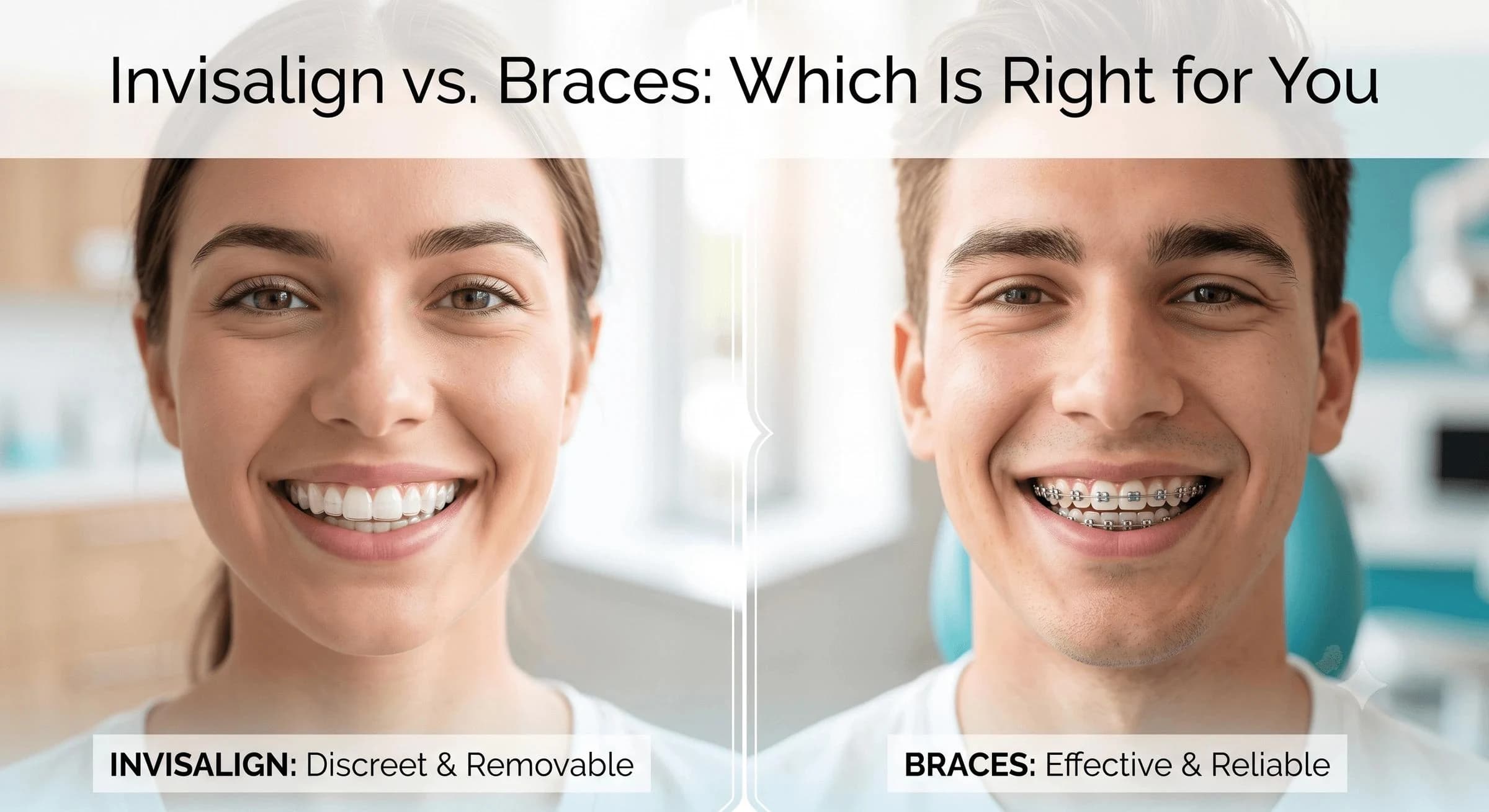
The best orthodontic option starts with your bite and goals. Appearance matters, but so do the movements your teeth need, your oral health and the routine you can maintain. This guide compares the three options offered at AiCare: Invisalign clear aligners, traditional braces and LightForce braces.
The Short Answer
Invisalign is removable; traditional and LightForce braces are fixed. LightForce uses custom 3D-printed brackets based on a digital treatment plan. All three need professional planning, progress checks, good daily care and retainers afterward.
Use the comparison below to prepare questions for Dr. Ai Huang. It helps explain the choices; an examination determines which choices are suitable for your teeth.
How Each Treatment Works
Invisalign clear aligners. A sequence of custom removable trays moves teeth according to the treatment plan. Tooth-colored attachments or elastics may also be needed. Follow your prescribed tray-change schedule; do not advance to a new set on your own.
Traditional braces. Brackets are bonded to the teeth and connected by a wire. Dr. Huang plans and adjusts the forces used to move teeth and address the bite. Elastics or other appliances may be part of the plan.
LightForce braces. Digital planning and patient-specific 3D-printed brackets customize the fixed appliance. The brackets remain attached throughout active treatment. Customization does not remove the need for follow-up visits, cleaning or patient cooperation.
On a small screen, swipe the table to compare all options.
| Consideration | Invisalign | Traditional braces | LightForce braces |
|---|---|---|---|
| Appliance | Removable clear trays | Fixed brackets and a wire | Custom 3D-printed fixed brackets and a wire |
| Daily responsibility | Usually 20–22 hours of wear daily, as prescribed | Protect brackets; use elastics if prescribed | Protect brackets; use elastics if prescribed |
| Meals | Remove trays for eating and drinks other than water | Avoid foods that can damage brackets or wires | The same food precautions as other fixed braces |
| Cleaning | Brush and floss with trays out; clean the trays too | Clean carefully around brackets and beneath wires | Clean carefully around brackets and beneath wires |
| Visibility | Clear trays; attachments may be visible | Visible brackets and wire | Custom brackets and wire; discuss available bracket options |
| After treatment | A retainer plan | A retainer plan | A retainer plan |
Cost Comparison: What Fountain Valley Patients Should Expect
Ask for an individual written estimate instead of choosing from a national price range. The amount of correction, treatment complexity and care included in the plan can affect fees. A particular brand does not tell you the total cost of your treatment.
Which visits, records and appliances are included?
How are additional aligners, repairs or replacement retainers handled?
What orthodontic benefits remain under my plan, and are there age limits?
What is due at the start, and how are later payments scheduled?
AiCare offers flexible in-house 0% interest payment plans. The team can explain your estimate and payment schedule. Explore insurance and payment planning.
Treatment Time
There is no single timeline that applies to all patients with one appliance. The bite correction, complexity of movement, treatment response and consistency of daily care affect progress. Ask Dr. Huang for the estimated duration of your recommended plan, including how any additional aligners or adjustments would be handled.
Invisalign needs consistent prescribed wear. Fixed braces need care too: broken brackets, missed visits and inconsistent elastic wear can interrupt treatment. Choosing fixed braces is not a substitute for patient participation.
Effectiveness: Does One Work Better?
The useful question is which appliance can support the planned tooth movements in your case. Dr. Huang considers crowding or spacing, how the teeth meet, gum and bone health, and any existing dental work. Some patients can choose between approaches; others may have a stronger clinical reason for a particular option.
Ask her to explain the goal behind the recommendation and any limitations. A digital simulation is a planning tool, not a guarantee of an exact result.
Lifestyle & Comfort
At meals. With Invisalign, plan time to take them out, store them and clean your teeth before putting them back in. With fixed braces, adapt food choices and preparation to protect the appliance.
During daily cleaning. Removing your Invisalign aligners gives access for brushing and flossing, but the trays also need care. With either type of braces, allow time to clean around the brackets and wires. Continue routine dental visits during orthodontic treatment.
During adjustment. Any appliance can cause temporary pressure or irritation as teeth move. Ask the team how to manage discomfort and whom to call if an appliance breaks or feels wrong.
Which Is Right for Your Child or Teen?
The choice depends on development, treatment needs and readiness to follow the plan, rather than age alone. Discuss the child’s ability to manage removable trays, clean around braces and use elastics when prescribed. A first evaluation does not automatically mean treatment must start immediately.
Read about orthodontic care for different ages.
Invisalign vs. Braces: Quick FAQ
Is LightForce the same as Invisalign? No. LightForce is a fixed-braces system that uses custom brackets and digital planning.
Is Invisalign always faster or less expensive? No single appliance determines your timeline or fee. Compare plans based on the treatment goals, responsibilities and care included.
Will I need retainers? Yes. Retention is part of maintaining the result after Invisalign or braces. Ask about retainer type, wear instructions and follow-up care.
What if I had braces before? Dr. Huang can assess the changes and discuss whether retention, limited correction or broader treatment is appropriate. Read about teeth shifting after braces.
The Best Way to Decide: A Consultation in Fountain Valley
At your Fountain Valley consultation, Dr. Huang reviews the examination, X-rays and iTero scan with you in a private room. Allow 1–1.5 hours to discuss the findings, suitable options and fees. There is no charge before you sign a treatment agreement.
Plan your first consultation. You can also explore Invisalign, traditional braces and LightForce braces in more detail.