
My Teeth Shifted After Braces: What Are My Options?
Reviewed by Dr. Ai Huang, board-certified orthodontist at AiCare Orthodontics.
You may notice a new overlap when you smile, a small gap, or a retainer that no longer seats the way it used to. Changes after orthodontic treatment are worth discussing, but they do not automatically mean starting over with a full course of braces.
The next step is an orthodontic evaluation. The recommendation depends on what moved, how your teeth meet and the condition of your retainer. If the retainer will not fit properly or causes pain, do not force it into place.
Why can teeth shift after braces?
Teeth and the supporting tissues continue to change through life. After active treatment, teeth may move toward earlier positions; this is often called orthodontic relapse. Changes associated with growth and aging can also affect alignment.
Retainers help maintain the positions achieved by treatment. Interrupted wear, a lost retainer, damage or a loose bonded wire can reduce that support. Tell the orthodontist about your retainer history without worrying about being judged; the useful starting point is how your teeth are now.
What if my retainer does not fit?
A snug retainer and one that will not seat properly are different situations. Contact the office if the fit changes, a wire becomes loose or the appliance is damaged. Do not bite a poorly fitting retainer into place, heat it to change its shape or try to repair a bonded wire yourself.
Keep the retainer and bring it to the appointment. The team can check whether the issue is appliance damage, tooth movement or both. A replacement retainer may hold the current position; it does not necessarily correct teeth that have already shifted.
What will Dr. Huang evaluate?
Which teeth have changed and whether your bite feels different.
Your earlier treatment, current retainer and wear history.
The health of your teeth and gums, and existing dental work.
Your priorities: appearance, bite, cleaning access or a combination.
Records help explain the changes and guide a recommendation. Bring any earlier treatment records you have, along with your retainer. A photograph alone cannot show every factor needed to decide whether a short correction will be enough.
Retainer care, limited correction or broader treatment?
Retainer care or replacement. If the current alignment is acceptable and there is a retention problem, the recommendation may focus on a properly fitting retainer and a clear wear schedule.
Limited correction. Some changes may be addressed with a focused course of aligners or braces. Whether this is appropriate depends on the bite and the movements needed, not simply the number of teeth that look different.
A broader plan. When more of the bite or alignment needs attention, a more comprehensive approach may be recommended. Ask what a limited plan would leave unresolved, as well as what a broader plan aims to change.
Can Invisalign, traditional braces or LightForce help?
Each option is a tool for carrying out a treatment plan. Previous braces do not automatically make someone an Invisalign candidate, and repeat treatment does not automatically require the same appliance used before. Discuss suitability and daily responsibilities with Dr. Huang.
Compare Invisalign, traditional braces and LightForce.
How long will it take, and what will it cost?
There is no reliable timeline or fee based only on the phrase “teeth shifted.” Ask for a written plan explaining the goals, expected duration, appointments and costs. Clarify whether retainers, additional aligners and follow-up care are included and how replacements are handled.
AiCare offers flexible in-house 0% interest payment plans. If you used orthodontic insurance benefits during earlier treatment, ask the team to help clarify any remaining benefit before relying on it. Read about insurance and payment planning.
How do I protect the result afterward?
Retention is an ongoing part of orthodontic care, including after a second course of treatment. Follow the wear and cleaning instructions for your particular retainer. Store removable retainers in their case and tell the office promptly if one is lost, damaged or no longer fits.
Ask who to contact for a fit check, when to return and how replacement retainers are arranged. Include this maintenance plan in the decision before you begin active treatment.
Plan an evaluation at AiCare
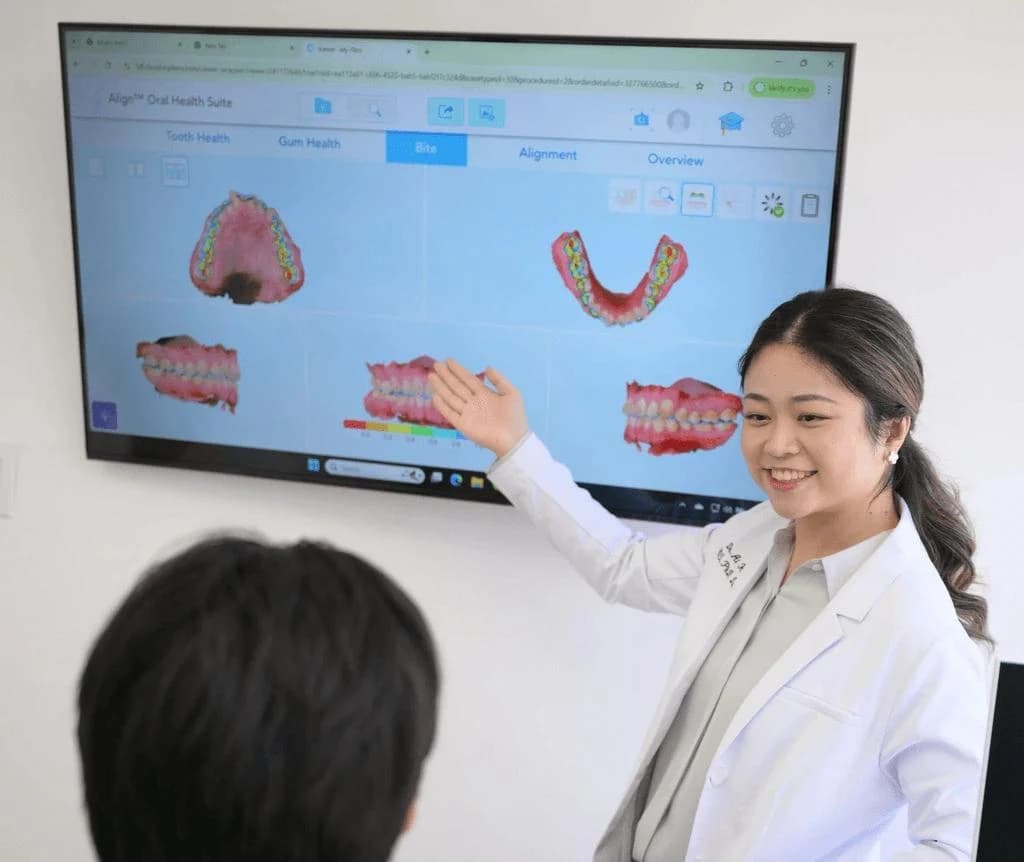
For a new-patient consultation, visit our Fountain Valley office and allow 1–1.5 hours. Dr. Huang reviews your examination and digital records with you on a large screen in a private room, then discusses options and answers your questions. The consultation, including X-rays and an iTero scan, is free.
Already an AiCare patient with a retainer concern? Call 714-962-3327 so the team can arrange the right appointment. Dr. Huang also sees patients for scheduled retainer visits in Irvine.