What Makes an Orthodontist Board Certified?
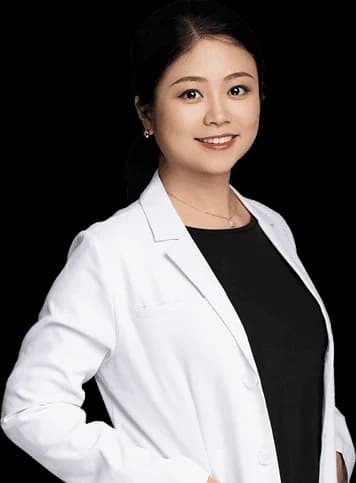
Reviewed by Dr. Ai Huang, board-certified orthodontist at AiCare Orthodontics.
Browse orthodontist websites around Fountain Valley, Irvine and Orange County and you'll see the phrase everywhere: board certified. It sounds impressive — but most patients have no idea what it actually means, whether every orthodontist has it, or whether it should influence who they trust with their smile.
Board certification is a voluntary credential awarded by the American Board of Orthodontics (ABO). It involves written and clinical examinations and ongoing renewal requirements, in addition to orthodontic specialty training.
As a board-certified orthodontist in Fountain Valley and Irvine, Dr. Ai Huang went through this process herself. Here's what it involves, and why it exists.
First, Some Background: Dentist vs. Orthodontist
To understand board certification, you need the ladder it sits on top of:
Dentist. Four years of dental school after college. A general dentist can legally perform any dental procedure — including braces and clear aligners.
Orthodontist. A dentist who then completed a competitive, accredited orthodontic residency — an additional 2–3 years focused entirely on diagnosing and correcting tooth position, bite, and jaw growth. Only residency graduates may call themselves orthodontists.
Board-certified orthodontist. An orthodontist who then voluntarily went one step further and passed the American Board of Orthodontics examination process.
Orthodontic specialty training and ABO certification are separate credentials. Certification is voluntary.
What Is the American Board of Orthodontics?
The American Board of Orthodontics (ABO) was founded in 1929, making it the oldest specialty certifying board in all of dentistry. It is also the only orthodontic certifying board recognized by the American Dental Association — so when you see "board certified orthodontist" in the U.S., ABO certification is the credential that phrase should refer to.
The ABO's stated mission is simple: to certify that an orthodontist has demonstrated, to an independent panel of examiners, the knowledge and clinical judgment the specialty considers its highest standard.
What Does It Take to Get Certified?
Certification isn't a membership you buy or a weekend seminar. The modern process includes:
A comprehensive written examination covering the full scope of orthodontic science — biomechanics, growth and development, diagnosis, treatment planning, and more.
A rigorous clinical examination, where the orthodontist's diagnostic reasoning and treatment decisions are tested across every phase of care: gathering records and reaching a diagnosis, setting treatment objectives, managing active treatment, and critically evaluating finished outcomes.
Ongoing renewal. Certification is time-limited — it must be renewed periodically (currently on a 10-year cycle), so a board-certified orthodontist is committing to being re-examined throughout their career, not just once.
In other words: an orthodontist who is board certified volunteered to have their clinical thinking and their standards examined by the toughest audience in the field — their peers — and to keep doing so for as long as they practice.
Why Is Board Certification Voluntary?
Board certification is an additional professional credential. When choosing a provider, ask about orthodontic specialty training, board-certification status and the proposed treatment plan.
So the credential works as a signal. It doesn't guarantee that a certified orthodontist is right for you, and it doesn't mean a non-certified orthodontist is a poor one. What it does tell you is something you can't easily observe as a patient: this doctor chose accountability when nothing forced them to, and an independent board verified their clinical judgment against the specialty's highest standard.
When you're choosing someone to plan 12–24 months of irreversible changes to your teeth and bite, that verified-by-peers signal is one of the few objective quality markers available.
What Board Certification Means for You as a Patient
Practically, choosing a board-certified orthodontist like Dr. Huang means:
Examined diagnostic judgment. The certification process centers on exactly the skill patients can't evaluate themselves: whether the doctor reads a case correctly and plans it well.
A commitment to outcomes, not just treatment. ABO examination emphasizes critically assessing finished results — a habit that carries into everyday practice.
Ongoing accountability. Renewal requirements mean the credential reflects current proficiency, not a one-time achievement from decades ago.
At AiCare Orthodontics in Fountain Valley, board certification sits on top of an unusually deep academic foundation: Dr. Ai Huang holds a dental degree from Rutgers School of Dental Medicine, completed her orthodontic residency at UCLA, and earned a PhD in dentistry before that. That background shapes how every case is planned — whether it's braces, Invisalign, or LightForce 3D-printed brackets.
How to Check Any Orthodontist's Certification
Don't take a website's word for it — verify in two minutes:
Search the doctor’s name in the American Board of Orthodontics Orthodontist Locator and check the listed certification status.
The AAO member locator is a separate directory. AAO membership alone does not verify ABO board certification, and absence from an AAO directory alone does not establish a provider’s training or licensing status.
Quick FAQ
What does "board certified orthodontist" mean? It means the orthodontist voluntarily passed the American Board of Orthodontics' written and clinical examinations — the specialty's highest credential — and maintains it through periodic renewal.
Are all orthodontists board certified? No. ABO certification is voluntary and separate from orthodontic specialty training.
Is a board-certified orthodontist better? Certification doesn't guarantee outcomes, but it's an independent, peer-verified marker of clinical judgment — one of the few objective quality signals patients can check.
Is Dr. Ai Huang board certified? Yes. Dr. Huang is certified by the American Board of Orthodontics and practices at AiCare Orthodontics in Fountain Valley, California.
How do I verify an orthodontist’s certification? Use the ABO Orthodontist Locator to check current status.
Choosing a Board-Certified Orthodontist in Fountain Valley / Irvine
Credentials aren't everything — how a doctor listens, explains, and treats you matters too. Our advice: verify the credentials first, then judge the consultation.
Dr. Ai Huang, BDS, PhD, DMD, is a board-certified orthodontist at AiCare Orthodontics, serving Huntington Beach, Westminster, Garden Grove, Irvine, and greater Orange County, with consultations in English, Mandarin, Vietnamese, and Spanish.